The Hole in a Pot Handle: Design, Hanging, and Heat
By Object Index Editorial TeamPublished Last reviewed
- Common name
- The Hole in a Pot Handle: Design, Hanging, and Heat
- Category
- Kitchen & Table
- Also called
- spoon rest hole, handle cutout, hanging hole
- Typical materials
- stainless steel, cast iron, bakelite or thermoset polymer (handle body)
- What it does
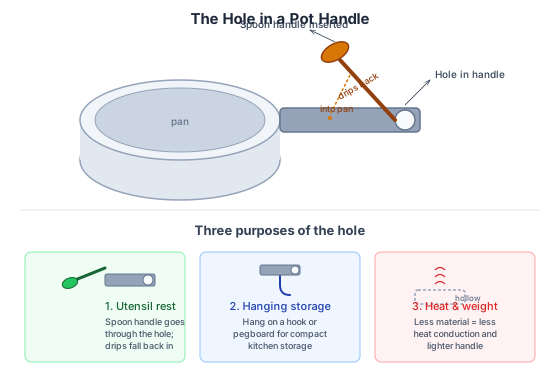
- A hole at the end of a pot handle lets you rest a cooking spoon through it so drips fall back into the pan, and also allows the pan to be hung for storage.
- Last reviewed
- 2026-08-18
Direct answer
The hole at the end of a pot or pan handle has three jobs, and only one of them is the reason most people think it exists. Its primary design purpose is to serve as a built-in utensil rest: you slide the handle of your wooden spoon or spatula through the hole, and the spoon hangs at an angle over the pan. Any sauce, oil, or food drips straight back into the meal instead of onto your stovetop. Business Insider confirms this is the intentional design rationale. The secondary purpose — the one everyone already knows — is hanging storage: the hole lets you hook the pan onto a wall rack or pegboard. And the third, less obvious benefit is heat and weight management: removing material from the end of the handle reduces heat conduction and makes the pan lighter.
The utensil rest you never knew about
This is the purpose that surprises most people. When you are cooking with multiple pans and need to set down a sauce-covered spoon, you have two bad options: put it on the counter (messy) or leave it in the pan (it might slip in or get too hot). The hole solves both problems. You thread the spoon handle through the opening, and the spoon bowl hangs suspended over the pan at an angle. Chowhound’s kitchen writers describe the trick exactly this way: angle the clean end of the spoon through the hole so the messy end hangs over the cookware, keeping drips off the counter and the spoon within arm’s reach.
Not every utensil fits every hole. The diameter varies by manufacturer, and many thick-handled wooden spoons are too bulky. But for standard flat-handled spatulas and thinner wooden spoons, it works reliably. The next time you are stirring a pot of soup, try it: slide the spoon handle through the hole and let gravity do the rest.
The hanging purpose
Hanging is the use everyone assumes, and it is legitimate — just not the only one. Storing pans on a wall rack or pegboard saves cabinet space, keeps cookware visible and accessible, and looks good in an open kitchen. The hole is the natural attachment point for a hook. In professional kitchens, hanging pans from overhead racks is standard practice because it keeps the counter clear and the pans within reach. For home kitchens, it is a practical storage solution that predates the modern trend of open shelving.
Heat dissipation and weight
The hole does double duty as an engineering feature. Made In’s cookware guide explains that a hollow handle core dissipates heat away from the grip, keeping it cooler during stovetop cooking. The same principle applies to the hole at the end: removing material reduces the cross-section through which heat can conduct from the hot pan body to the part you hold. A solid metal handle transfers heat all the way to the end; a hollow or perforated handle breaks that path.
The weight benefit is real too. A frying pan is heavy enough without a solid handle adding more mass. The hole shaves off a few grams, and when you are tossing vegetables or flipping a pancake, every gram matters. Professional chefs who use pans for hours during a dinner service notice the difference — lighter handles mean less wrist fatigue.
A brief history of the frying pan
The frying pan is ancient. Greek and Roman cooks used small iron and bronze pans for frying meat, fish, and dough in olive oil, and the basic form — a round flat bottom with a protruding handle — has stayed remarkably consistent ever since. During the Middle Ages, lower-income households used durable wrought-iron pans while wealthier families cooked with copper. The modern era arrived in the 20th century: Teflon, invented in 1938, revolutionised non-stick cooking and created the coated pans that dominate today’s kitchens. The handle hole is a relatively modern addition, appearing as cookware design became more standardised in the mass-production era.
What the hole is not
“It is only for hanging.” No. Hanging is one use, but the utensil rest function was the original design intent, and many manufacturers now market it explicitly.
“Every pan has one.” Many do, but not all. Some high-end skillets have solid handles, some cast-iron pans have loop handles without holes, and some small saucepans have handles too short for a meaningful opening. The hole is common, not universal.
“You can put any spoon through it.” The hole diameter varies. Thick-handled wooden spoons, large ladles, and silicone spatulas with bulky grips often will not fit. Measure your most-used utensil against the hole before relying on this trick.
“The hole makes the handle weaker.” In a well-designed pan, no. The handle is engineered as a complete structure with the hole as a planned feature, not a defect. The cross-section around the hole is thick enough to support the pan’s weight. A hole that causes cracking or flexing indicates poor manufacturing, not a design flaw.
This entry is part of the kitchen & table category. For how this site checks claims like these, see the method page, and for more kitchen vocabulary, try the glossary.
The design rationale and history claims in this entry were checked against the cited references on 18 August 2026. Corrections are welcome through the contact page.
Sources
- Business Insider — Why Pan Handles Have a Holeaccessed 2026-08-18
- Chowhound — The Hole In Your Pot Handle Was Made To Hold Messy Stirring Spoonsaccessed 2026-08-26
- Made In — What Is a Stay Cool Handle?accessed 2026-08-18
- Wikipedia — Frying pan (history)accessed 2026-08-26
Related entries
What a Can Pull Tab Is Called
The tab on a modern drink can is a stay-on tab. Here is the vocabulary for its parts, the lever mechanism, and the story of how it replaced the church key.
Why Door Hinges Have Removable Pins
Most interior doors hang on loose-pin butt hinges: lift the pin and the door comes off the frame without a single screw being turned.
Spotted a mistake? Tell us about it and we will correct the entry.